
How to harvest outdoor cannabis plants
When to cut, how to read trichomes, and what to do when the forecast disagrees with the plant. A harvest guide written for a short northern season.
Indoors, you harvest when the plant is ready. Outdoors in the north, you harvest when the plant is ready or when the weather says time is up, whichever comes first, and those two things almost never line up.
That is the whole problem with an outdoor harvest up here. Everything else is procedure. This covers how to tell when a plant is actually ripe, when to override that and cut anyway, what to do in the last week, and how to get the plants down and into the dry without undoing a season of work in an afternoon.
Read the trichomes, not the pistils
Pistils are the hairs. People watch them turn from white to orange and call it ripeness. They are a rough gate at best: pistils also brown from humidity, from being handled, and from pollination. A plant can look finished by its hairs and still be a week or two out.
Trichomes are the actual signal. They are the resin glands, and they change colour as the plant finishes:
- Clear. Not ready. Potency is still building and you are leaving weight and effect on the table.
- Cloudy or milky. The peak window. This is where most growers want the bulk of the plant.
- Amber. THC is degrading toward CBN. The effect gets heavier and more sedative, and the high end of the potency is behind you.
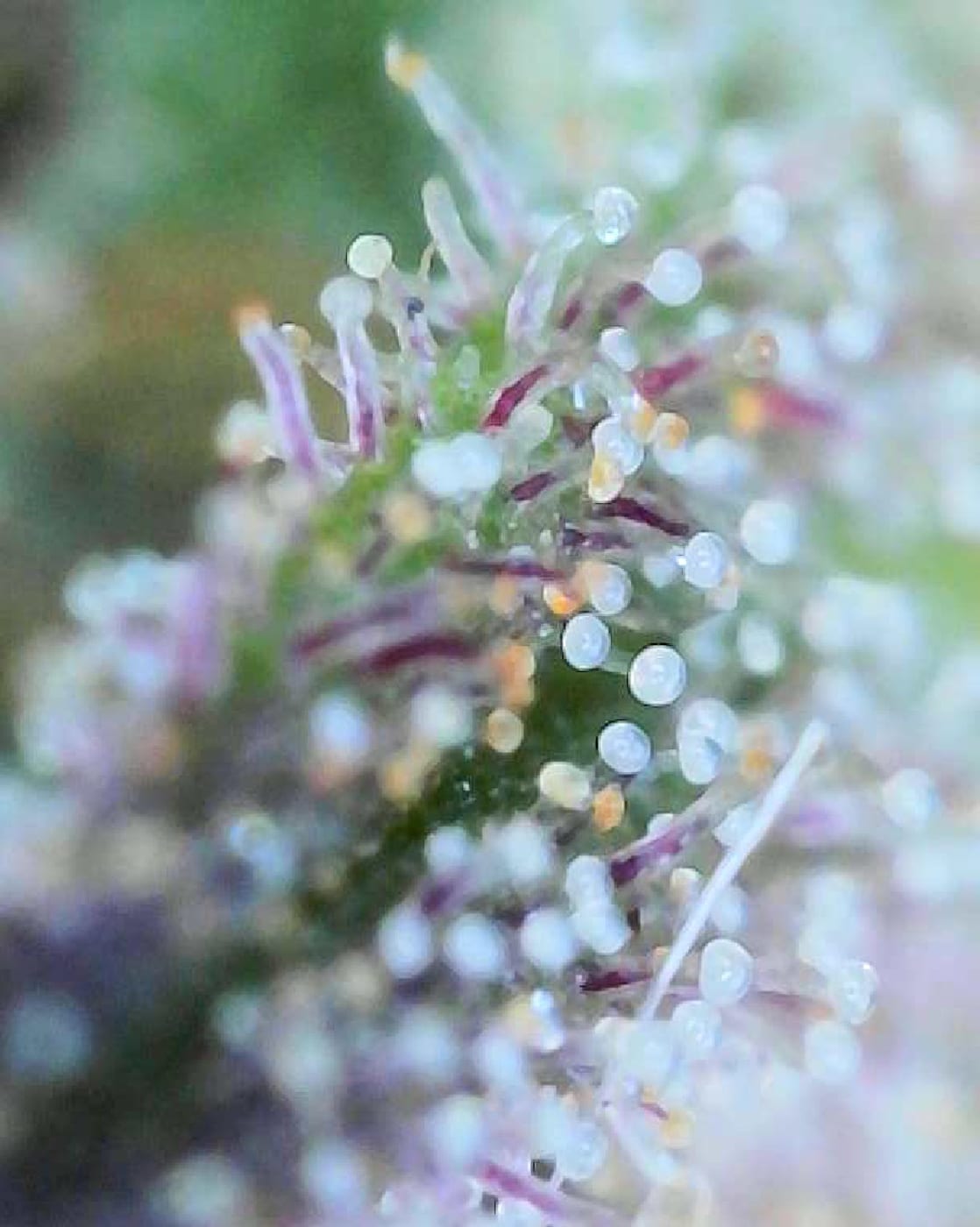
Mostly cloudy heads with a few amber ones scattered through. This is the window described above.
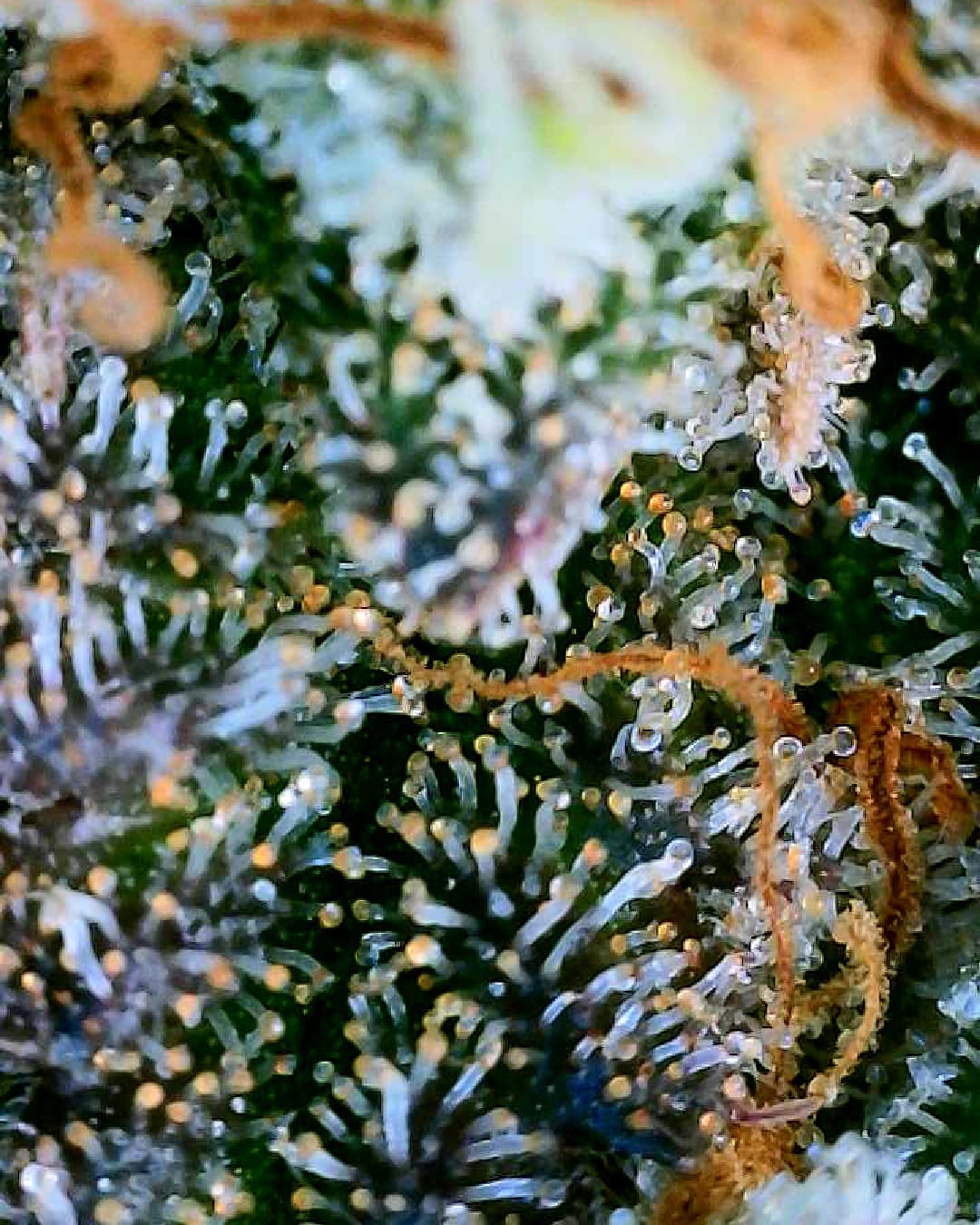
Amber heads running right through the cluster. This one is past the peak window, into heavier and more sedative.
A common target is mostly cloudy with something like ten to twenty percent amber for a balanced finish, and more amber if you want a heavier result. There is no single correct number. It depends on what you want out of the jar.
Two things matter about how you look:
Use magnification. You cannot judge this with your eyes. A jeweller's loupe or a cheap clip-on phone scope is enough, and either one costs less than a pack of seeds. Guessing here is the most expensive mistake in the whole process, because you only get one shot at it per plant per year.
Look at the flower, not the sugar leaves. Trichomes on sugar leaves mature earlier than the ones on the calyxes, so reading the leaves tells you the plant is further along than it is. Check the bud itself, in several spots, on more than one plant.
Also remember that a plant does not ripen all at once. Tops get more light and finish before lower buds. Taking the tops first and giving the bottom another week is a legitimate approach, and it is often the better one on a big outdoor plant.
Then read the forecast
This is the part that is specific to growing where we grow.
A light frost is usually survivable. A mature plant can take a night in the upper twenties or low thirties without much harm, and some growers get good colour out of those cold nights. It is not automatically an emergency.
A hard freeze is different. It damages plant tissue, and damaged wet tissue is exactly where botrytis gets started. A plant that froze hard and then thawed wet is a plant with a problem.
Sustained rain near ripeness is the bigger threat. Cold is survivable. A week of rain on dense, nearly finished colas is how people lose entire plants in the last stretch. If you have not read it, the bud rot guide covers what to watch for and how to catch it early.
So the rule that actually matters: a few days early beats a rotted crop. Flower cut slightly before peak is a little less potent than it could have been. Flower left out through a wet spell can be worthless. That trade is not close, and in a northern autumn waiting is rarely the move that gets rewarded.
If you are cutting under pressure and cannot take everything at once, prioritise the densest colas and anything with confirmed rot. Those are what you lose first.
The last week
A few things come up every year, and two of them are arguments.
Flushing is genuinely contested. Plenty of experienced growers run plain water for the last week or two and are certain it matters for smoothness and ash. At least one controlled trial found no meaningful difference in a soilless setup. If you are in living soil outdoors, you are not really flushing anything anyway, because the soil is the feed. Make your own call, but know it is debated rather than settled.
Darkness before harvest has no good evidence behind it. The idea that forty eight hours of dark increases resin is widely repeated and poorly supported. Outdoors it is impractical on anything bigger than a pot you can move, which settles it for most people.
What is worth doing in the last week:
- Stop foliar spraying entirely. Anything you spray now sits in dense flower where it cannot dry.
- Scout one more time for rot and caterpillars. This is your last chance to pull a problem before it goes into the dry room with everything else.
- Do not water heavily right before you cut. A saturated plant is a wetter plant to dry, and the first forty eight hours of drying are where most of the risk is.
Cutting day
Go in the morning, but wait for the dew. Those two pull against each other and you have to split the difference. You want the dew gone so you are not taking standing water indoors, and you want to be done before the day heats up, because terpenes are volatile and warm plants lose them. Mid to late morning on a clear day is usually the window.
Work branch by branch, not whole plant. Whole plants are awkward to carry, awkward to hang, and they dry slower because of the mass of stem. Cutting into manageable branches gives you more control over the dry and makes a crowded drying space work. The exception is if your drying area runs too dry, where the extra mass of a whole plant usefully slows things down.
Keep your strains separate and labelled as you go. Obvious until you are three plants in with branches on every surface. If you run several strains, as I do, tag them at the moment you cut rather than trying to remember later.
Sterilise your shears between plants if you found any rot. Same discipline as cutting rot out mid-season: otherwise you are carrying spores from one plant to the next on the blades.
Get everything out of the sun immediately. Cut flower sitting in direct sun on a tarp is losing terpenes the whole time. Move it inside as you go rather than piling it up outdoors and making one trip.
A sharp pair of pruners and a second small pair for detail work covers it. The harvest and cure section of my gear list has the trimming tools and the trays I use.
Wet trim or dry trim
This is the last decision of the day, and the right answer depends on your drying space rather than your preference.
Wet trimming means taking the leaves off right after cutting, then hanging bare bud. It is faster, far less messy than trimming dried flower, and it speeds up the dry because you have removed a lot of moisture-holding material.
Dry trimming means hanging whole branches with the leaves on and trimming after they are dry. It slows the dry down, the leaves shield the flower while it dries, and a lot of people find it gives better appearance and terpene retention.
The deciding factor is humidity. In a damp northern autumn, with a basement or garage that already sits humid, wet trimming is usually the safer choice because it helps the dry move along and gives rot less to work with. If your drying space is dry and you can control it, dry trimming is worth the extra time.
Whatever you choose, the plants go straight into a controlled dry from here. That stage ruins more outdoor crops than frost does, and it is covered in drying and curing.
The short version
- Judge ripeness by trichomes on the flower, under magnification, not by pistils or by eye.
- Mostly cloudy is the peak window. More amber means heavier and more sedative.
- Tops finish before the bottom. Taking a plant in two passes is fine.
- Light frost is usually survivable. A hard freeze and sustained rain are not worth gambling on.
- A few days early beats a rotted crop, every time.
- Skip the darkness period, and treat flushing as an open question rather than a rule.
- Cut mid morning once the dew is off, branch by branch, labelled as you go.
- Wet trim in a humid space, dry trim in a controlled one.
- Get it into the dry immediately, because that is where the crop is actually won or lost.
Every strain in the harvest gallery came down on some version of this, and the photos there show what different finishes actually look like on the same setup, from a full yellow fade to deep purple.